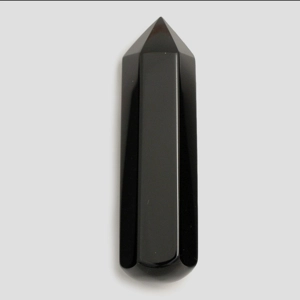
Black Obsidian Crystal Wand (60 Mm)
£13.55
Meadowsweet
Latin: Filipendula ulmaria (previously known as Spiraea ulmaria)
Also Known As: Queen of the Meadow, Bridewort, Little Queen, Gravel Root, Trumpet Weed, Lady of the Meadow, Steeplebush, Bride of the Meadow, Meadsweet, Mead Wort, Pride of the Meadow, Meadow Maid, Honeysweet, Dollor, Meadow Wort, Bridgewort, Dollof, Lace-Makers-Herb
Family: Rosaceae
Habitat and Description: Meadowsweet likes to grow with its feet wet, and can often be found on wetland, by rivers, commons and boggy ground. It also grows in or near ditches alongside fields and is a familiar sight in the countryside, where it is clearly visible in the flowering season with its tall plumes of creamy flowers. We’ve got loads of it growing near us, usually on roadsides and alongside fields, unsurprisingly. The leaves are roughly diamond shaped, deeply grooved and toothed around the edges, with a fairly rigid set to the leaves. The central stem is often reddish in colour, and the whole plant, which tends to be low growing until flowering, can grow up to about 2 to 4 feet tall. The flowers are creamy coloured and have a slightly feathery appearance. They are strongly fragrant and have been used in brewing and cooking since time immemorial.
Parts Used: The herb
Planetary Influence: Jupiter (although typically enough, our old friend Culeper disagrees and states that it is ruled by Venus. Since these two planets are fairly similar in terms of both being fairly mild and expansive, I don’t think it really makes much difference.)
Associated Deities and Heroes: Blodeuwedd, Aine, Gwena, Venus. Other women who could be considered to be Flowerbrides, such as Guinevere. Considering the long association of Meadowsweet with Faerie, its possible other faery deities could be listed here such as Morgana, Mab and Titania, and of course other Goddesses associated with love and beauty – such as Freyja and Aphrodite.
Festival: Midsummer